Tuesday, June 24, 2008

Amount of Space...


Figure 2.6: Amount of space required to transport the same number of passengers by car, bus or bicycle. Click here for larger image.


Thursday, June 19, 2008

Sze Tsung Leong

The photography of Sze Tsung Leong is really a phenomenon document of the majesty and tragedy of our world. I wrote about it on the other blog, but feel the need to cross post. I highly recommend checking out the collection Horizons online, and recommend even more strongly seeing it in person, if you get the opportunity.

Tuesday, June 17, 2008

Sunday, June 1, 2008

Method.com

About 11 months ago, I joined Method, a brand experience firm with a strong focus on design and technology that has built an excellent reputation over the last 10 years of delivering sometimes beautiful, sometimes innovative print, web, and other interactive projects for a wide-ranging client base. As I mentioned a few posts back, Method has launched our new website:

www.method.com


Check it out, and tell us what you think!

Can The West Lead Us To A Better Place?


An interesting article from Stanford Magazine, if slightly Stanford-centric, on the demographic changes that have shaped the American West in the past 140 years from Stanford professor David M. Kennedy, whose classroom lectures I would occasionally sneak into, not being a history major. The key themes of the article, briefly summarized: since the symbolic act of completing the Union-Pacific railroad, and more strongly pronounced since the onset of World War II the American West has undergone profound growth and demographic changes that act as both a model for an increasingly heterogeneous world and fundamentally relocate the centers of influence and power within the United States. A couple of minor notes:

- Kennedy suggests the immigrant mix of the American West as a potential model for other parts of the world (Sweden, Ireland) unaccustomed to the challenges of diversity. But is the American West, with an abundance of available land and a lack of centuries-old and strong cultural traditions, really a good model for the challenges of Europe and other nations trying to integrate new populations?

- Kennedy notes that in 1960, the last time an American president was elected from somewhere other than the South and the West, California had 32 electoral votes to New York's 45. Currently, California commands 55 votes, with New York's share having diminished to 31 -- and further, states that lie west of the 100th meridian cast 200 of the necessary 270 votes to elect a president. Kennedy speculates that, should demographic patterns hold, the West as a voting bloc may be able to elect American presidents on their own. Will the 200 year old precedents in the constitution hold under such drastic demographic changes?

- The environmental scarcity, particularly of water resources, that have always shaped the economies of the West (read Marc Reisner's excellent Cadillac Desert) will continue to determine the future of the West. With the growing economic influence of California, specifically, and the West's ability to foster and embrace large-scale technological change, perhaps one of the enduring legacies of the West will be in re-shaping the way large, demanding populations are able to thrive under environmental and resource pressures -- surely an enduring global challenge.

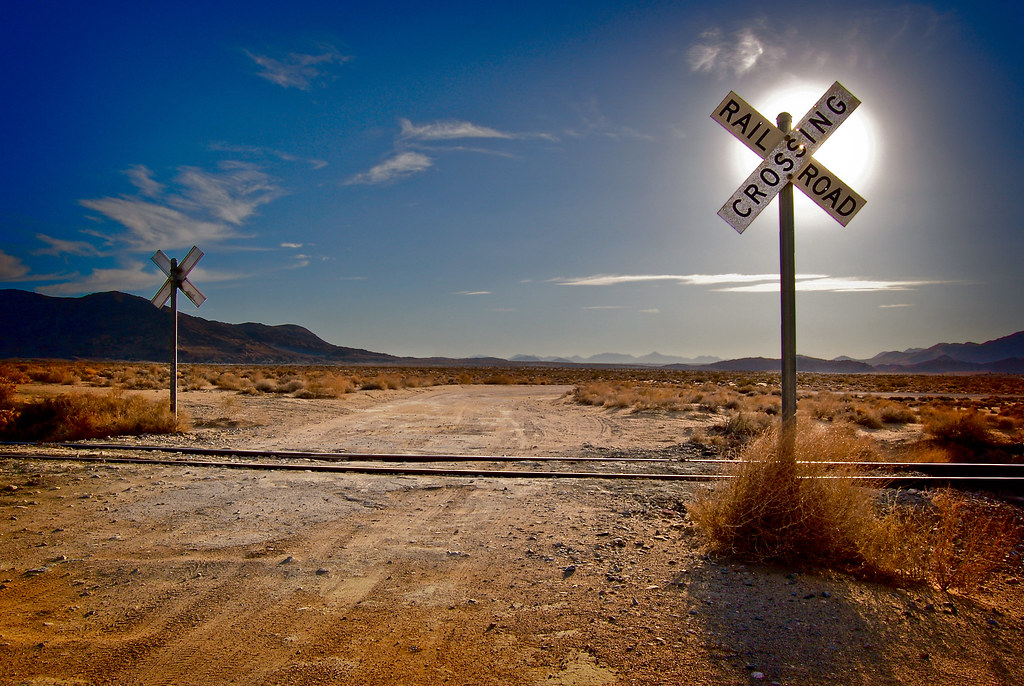
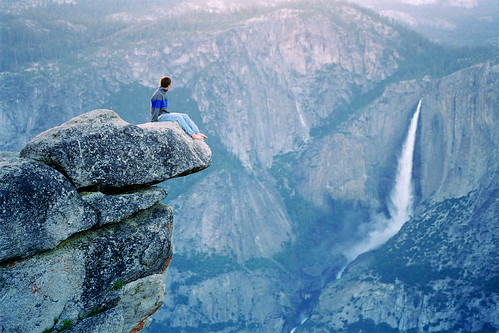
Photos above and below from a Flickr search for 'California.' Interesting, I suppose, that California in our imagination is still about the Pacific and mountains and expansive, magical vistas, and not the strip malls and subdivisions populated by the small shops owned by the Vietnamese and the Indians and the Mexicans and the huge, box-store malls where all the money goes. Or, as Thomas Pynchon envisioned it:
San Narciso lay further south, near L.A. Like many named places in California it was less an identifiable city than a grouping of concepts: census tracts, special purpose bond-issue districts, shopping nuclei, all overlaid with access roads to its own freeway. But it had been Pierce's domicile, and headquarters: the place he'd begun his land speculating in ten years ago, and so put down the plinth course of capital on which everything afterward had been built, however rickety or grotesque, toward the sky; and that, she supposed, would set the spot apart, give it an aura. But if there was any vital difference between it and the rest of Southern California, it was invisible on first glance. She drove into San Narciso on a Sunday, in a rented Impala. Nothing was happening. She looked down a slope, needing to squint for the sunlight, onto a vast sprawl of houses which had grown up all together, like a well-tended crop, from the dull brown earth; and she thought of the time she'd opened a transistor radio to replace a battery and seen her first printed circuit. The ordered swirl of houses and streets, from this high angle, sprang at her now with the same unexpected, astonishing clarity as the circuit card had. Though she knew even less about radios than about Southern Californians, there were to both outward patterns a hieroglyphic sense of concealed meaning, of an intent to communicate. There'd seemed no limit to what the printed circuit could have told her (if she had tried to find out); so in her first minute of San Narciso, a revelation also trembled just past the threshold of her understanding. Smog hung all round the horizon, the sun on the bright beige countryside was painful; she and the Chevy seemed parked at the centre of an odd, religious instant. As if, on some other frequency, or out of the eye of some whirlwind rotating too slow for her heated skin even to feel the centrifugal coolness of, words were being spoken. She suspected that much.


Tuesday, April 22, 2008

Design and the Elastic Mind

NOTE: In a few days, I'll announce the launch of our new www.method.com website. As part of the modern condition (and an up-to-date approach to extending our brand), we've got a corporate blog. Some of my thinking will be shifted there. I'll try to cross-post when appropriate. The following post is appropriate.

On Saturday, I took a trip up to the Museum of Modern Art in New York. The purpose of my visit was primarily to see the "Colour Chart" exhibit, although I also went with every intention of spending a good bit of time in the "Design and the Elastic Mind Exhibit." Both exhibits were entirely worthwhile, so if you are in New York before May 12th, check them out. But what was remarkable, particularly in comparison to the extremely accessible Color Chart exhibit, was how complete the enthrallment of the capacity crowd streaming through the Design exhibit.

After taking an hour to wander through the exhibit, I took another 45 minutes to simply people watch, to observe how the Saturday afternoon tourist crowd engaged with the various pieces in the show. It was an amazing spectacle, as young and old, bearded and bespectacled, distinctly European and distinctly New Jersey-an were all poring over the tiny and numerous explanations of each installation, leaning over exhibit tables and pressing their faces up against cases to get closer looks at objects, and touching things that they were instructed clearly not to touch. Why? Not because the design objects were immediately and obviously cool. Many of them, in fact, were not obviously cool. They were not shiny metal things, but rather, took a bit of study and consideration to appreciate the value of the object itself..

What quickly became clear was that so much of the crowd was completely taken by the explanations of the design objects -- engaged with the thinking and leaps of imagination that informed the design, as documented in the attached descriptions, or as intuited by the curious museum-goers. As much as the objects themselves, people found delight in unraveling or having explained the smarts that went into making them. The product of design wasn't the only cool thing. Design was the cool thing, too.

So what? Well, working in a design firm, I think that one of the unique challenges we face is to find ways to engage the audiences of our design more deeply in our process. For both the consumers of the experiences we build and for our clients, part of the value that we can add (and part of the delight that we can stimulate) is by helping our audiences appreciate the thinking behind our design. This may be by actually including them in our process, or it might be by designing products and experiences that, in addition to being elegant and valuable, are themselves articulate about the analysis or inspiration or intuition from which they sprung.

Rational Choice: Carrotmob

Two fundamental concepts of economics that have always frustrated me are the following:

1. An economic choice is fundamentally a value decision made by an individual. An economic actor is making an observable choice, revealing their values and preferences.

2. A market (or the market) uses price as a mechanism to efficiently allocate resources, based on supply and demand, fundamentally driven by the sum of the collective individual preferences of each of the actors in the market.

That may be an oversimplification, and it has been a while since I've taken an economics class, but the gist is right.

So, what's vexing? Well, two things. First, while so many of us claim to believe in one set of things (say, environmental responsibility, or justice, or equality) our revealed preferences show a clear priority in valuing a different set of things (say, comfort, or convenience, or entertainment).

Secondly, while we may truly believe in one set of things, we generally do not feel that our economic choices actually can influence the behaviors of "the market." While we are all supposed to be economic agents, who's behavior, in sum, matters, we feel a complete lack of agency, as far as our ability to make choices that will actually change markets.


With these two points running around the back of my head, I comment Carrotmob, both as an ingenious embodiment of these core economic principles, and as a very cool and innovative approach of connecting the individual economic choices that we might make with real world impact. While my understanding is that Carrotmob is just getting off the ground, I fully recommend taking a look at the organization, which has the potential to be a powerful and exciting change agent, and has, at its core, a possibly sustaining business model (probably not making anybody a millionaire, but perhaps sustaining the platform for change that Carrotmob may grow into...)

Thoughts?